Romania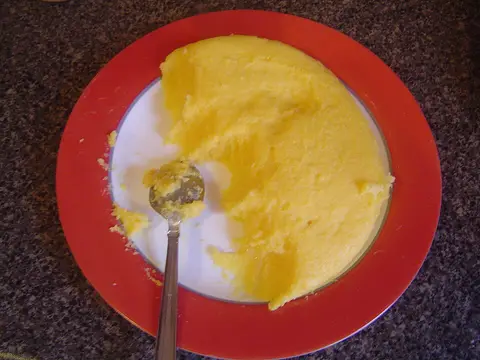 Photo: Unknown author, CC BY-SA 3.0, cropped
Mămăligă
/məməˈliɡə/muh-muh-LEE-guh
Recording: AdiJapan, CC BY-SA 4.0
No ratings yet. Be the first.
- Taste
- Savory
- Made with
- CornDairy & cheese
History
Mămăligă is a firm porridge of yellow maize flour boiled with water and salt, stirred until thick and turned out onto a board, then cut with a thread. Maize arrived in Romania in the 1600s and soon replaced millet as the staple of peasant families, for whom mămăligă was the daily bread. It is eaten with sarmale, with fried fish, with brânză, the salty sheep's cheese, and sour cream. A classic version is bulz, a ball of mămăligă with cheese at its centre, roasted on embers or in the oven. Romanian proverbs and jokes use mămăligă as a symbol of peasant patience. The dish is closely related to Italian polenta and the kačamak of the Balkans, and Moldova shares it as a national food.
Sources
